A different pen changes the way you write. A different notebook changes what you bother to write down. The tools we use to capture shape how we think — and that includes whether we type or speak.
Writing does two things at once: forming the idea and formatting it. Sentence structure, word choice, paragraph breaks. The internal editor kicks in before the thought has finished arriving. Speaking doesn’t work that way. You follow the idea. You don’t stop to rearrange the sentence you just said. And when a new thought arrives, you don’t worry about how to best integrate it into what you said before — you just say it, and it’s captured just the same. The messy version is often the honest version.
Why This Matters Now
In an age of AI, revisiting the proven practice of simply recording your thoughts turns out to be more relevant than ever. Voice preserves something that text doesn’t. Hesitation. Emphasis. The way an idea changes direction mid-sentence. These aren’t flaws to be edited out — they’re signals.
And recording works wherever inspiration strikes. On the go, at your desk, in your favourite reading chair. No keyboard required, no screen to stare at. Just the thought, captured.
Capture First, Process Later
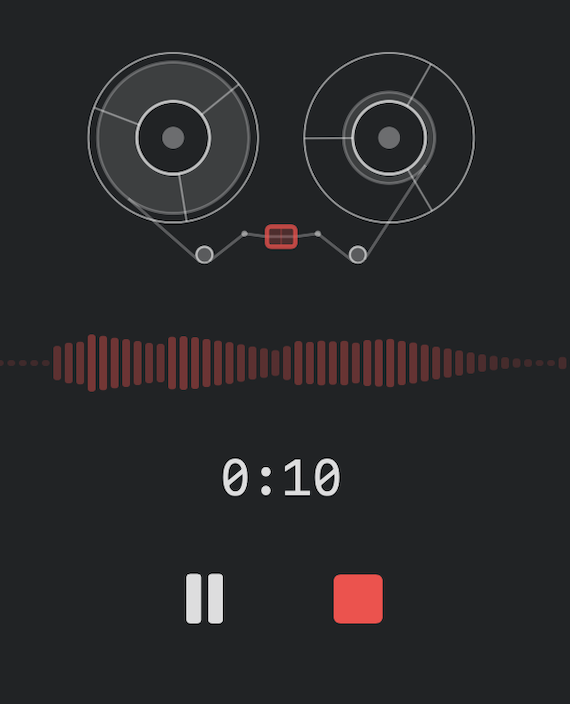
Capture should be instant, calm, frictionless. No interface decisions, no formatting choices. Just the thought, externalised. Processing — transcription, summarisation, organisation — is the machine’s job. It happens later, in the background, on your own hardware.
That’s the idea behind Signal Recorder SR-7. Everything runs on your device. When you’re ready, iCloud sync brings your library across Mac and iPhone, and a built-in MCP server opens your archive to AI tools. On your terms, not theirs.
The best capture tool is one you forget you’re using.