Moderation Happens Too Late
The fight over moderation and fact-checking runs downstream of ranking. By the time anything is reviewed, a system optimised for engagement has already chosen what was eligible to be seen.
What breaks social platforms isn’t a lack of moderation. It’s the purely algorithmic management of attention in the service of engagement.
You don’t get to see what you want to see. You see what you’re most likely to react to.
Which is why the fight over moderation and fact-checking is a distraction. Both operate downstream of the thing actually shaping what you see. By the time anything is reviewed, ranking has already chosen what was eligible. A platform can moderate perfectly and still hand you a distorted picture of the world.
The alternative is old. Twitter and Facebook both began as a feed in plain chronological order, showing you only the people you chose to follow.
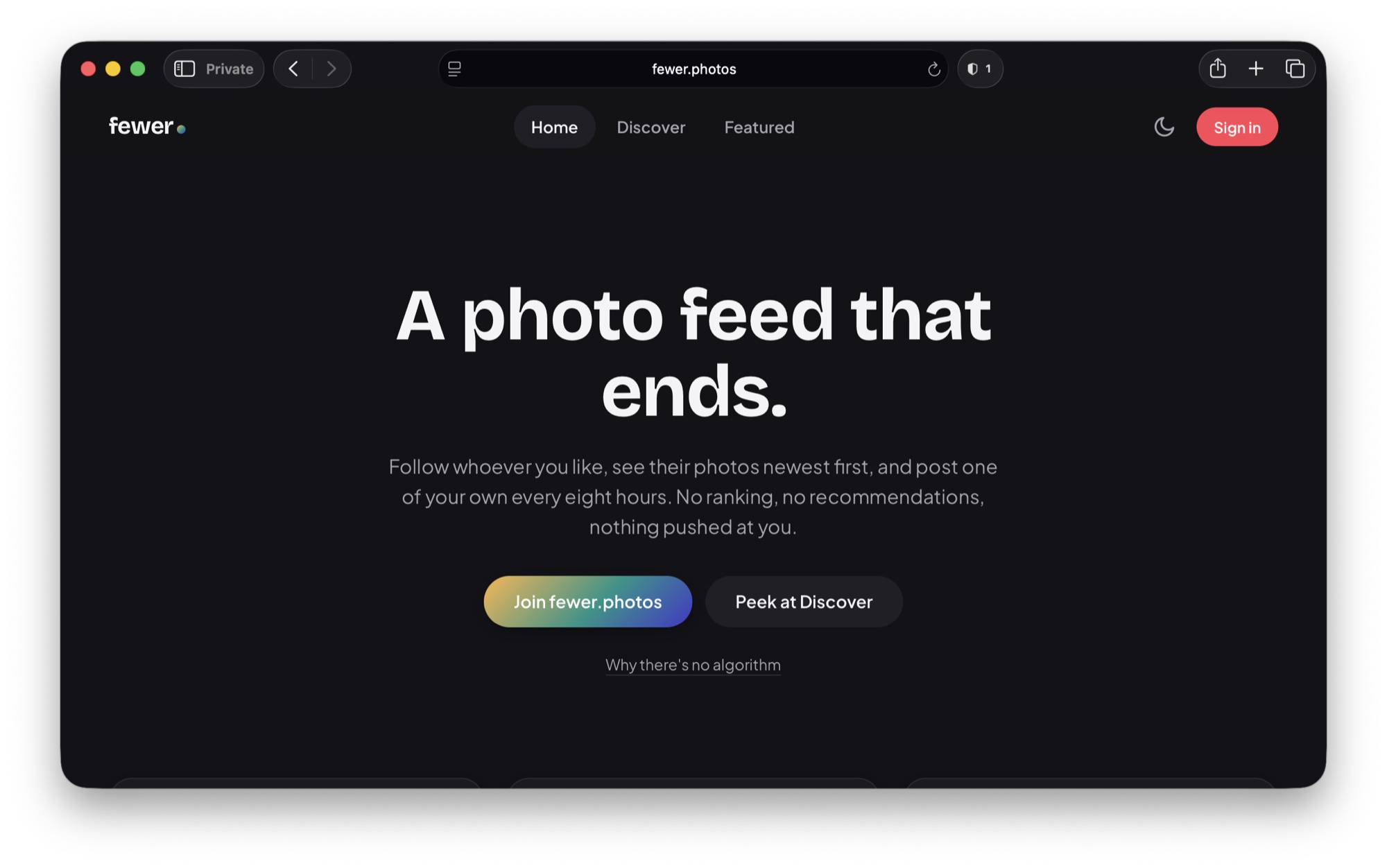
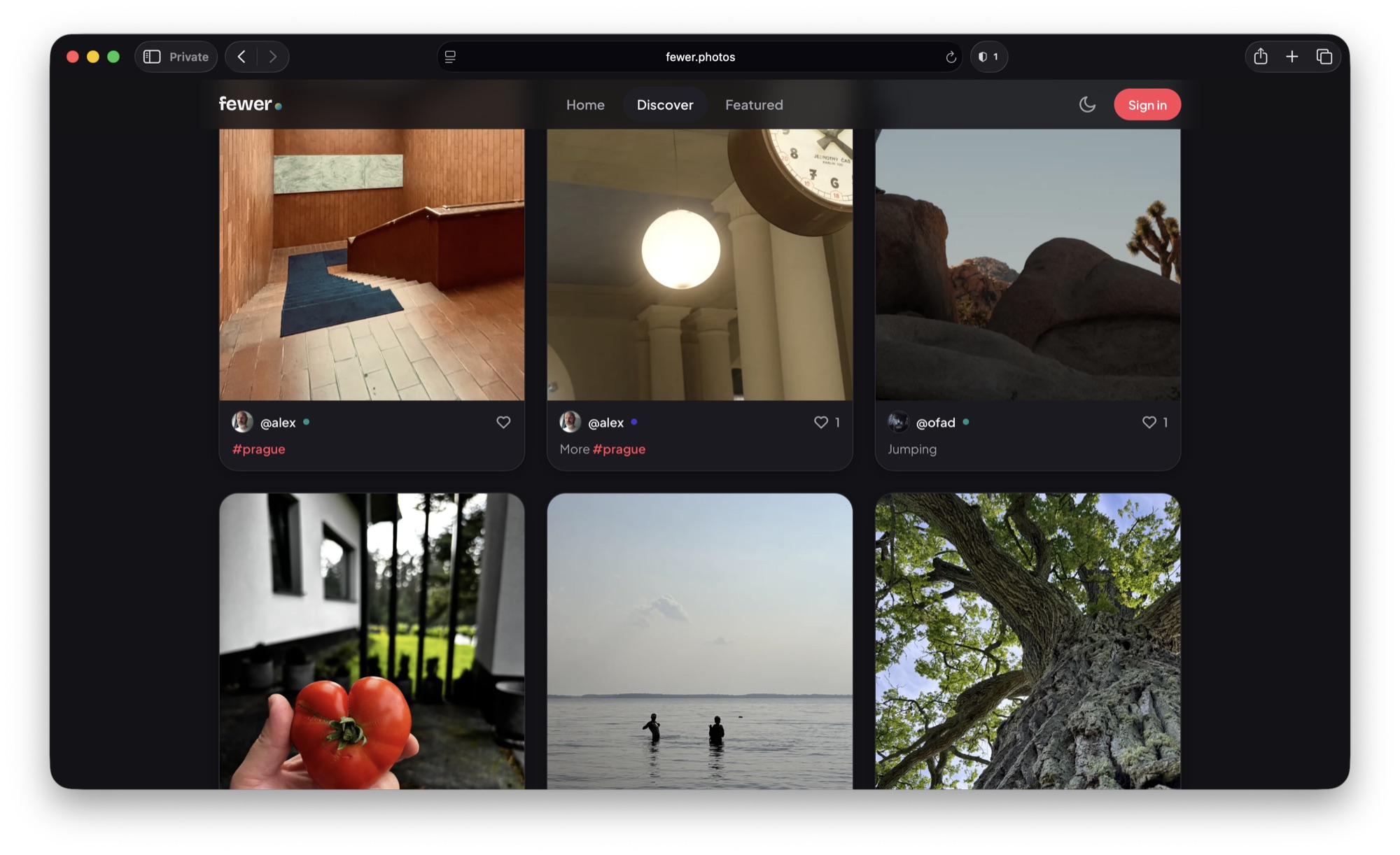
fewer.photos (opens in a new tab) is that feed. The people you picked and nobody else, no suggestions, no reshares, no follower counts anywhere. Reach the bottom and there is nothing underneath. The argument in full is on the app itself: why there’s no algorithm (opens in a new tab).
Tools that leave the decisions with you
Field Bureau + Werkstatt makes software for people who care about how they work. Each product is conceived on its own and keeps its own point of view — the markdown suite of SR-7 (opens in a new tab), ML-42 (opens in a new tab) and TR-2, the ET series, the small utilities, the web pieces. They share no format and no platform, and they were never meant to.
What runs through them is where the decisions sit. SR-7 transcribes on your own machine and keeps nothing. TR-2 edits the files you already own, so you can read the diff afterwards. Focus Timer counts down and does nothing else.
A feed ranked for engagement moves that decision somewhere you cannot see it, and makes it on a signal you never chose. fewer.photos hands it back. You pick who to follow, and the app shows you what they posted, in the order they posted it.
None of this is specific to photographs. It is the same call every tool here makes — fewer things, done well — in a product that happens to be social.